

1. Introduction: Why AI Matters in Fitness Today
In recent years, fitness apps have evolved dramatically — and in 2025 the integration of Artificial Intelligence (AI) is reshaping how we train. Rather than generic exercise routines, AI-powered apps analyze your fitness level, equipment availability, preferences and progress, then deliver customized workouts that adapt as you improve. This means you get smarter guidance, not just more content. Some apps even monitor which muscle groups you’ve worked and recommend when you should rest them, or suggest variations when you’re stuck. According to a recent overview, AI fitness apps like Fitbod, Fitness AI and others lead the way in 2025 for personalized programming. If you’re looking to get the most out of your workouts — especially from home or with limited equipment — using an AI-driven app can be a game-changer.
2. What “Personalized” Really Means in AI Fitness Apps
When we talk about a “personalized workout,” what do we actually mean? In the AI fitness app context, it typically includes the following elements:
- Customized plan: The app asks about your goals (strength, endurance, fat-loss), your current level, any limitations (injury, mobility), and equipment you have.
- Adaptive progression: As you log workouts, the AI learns your performance and adjusts sets, reps, weights, rest periods or exercise selection accordingly. For example, FitnessAI says it optimises sets, reps and weight every time you log a workout.
- Equipment and context aware: The best apps generate workouts based on whether you’re at home with bodyweight only or have a full gym setup.
- Recovery and variety: Good AI apps consider which muscle groups need rest, which areas you’ve neglected, and then create balanced plans.
- Feedback loops: The more you use the app, the better the workout fits you — your preferences, progress, and even how your body responded.
By understanding these pillars, you can better evaluate which apps truly deliver “personalization” instead of just offering a large library of videos.
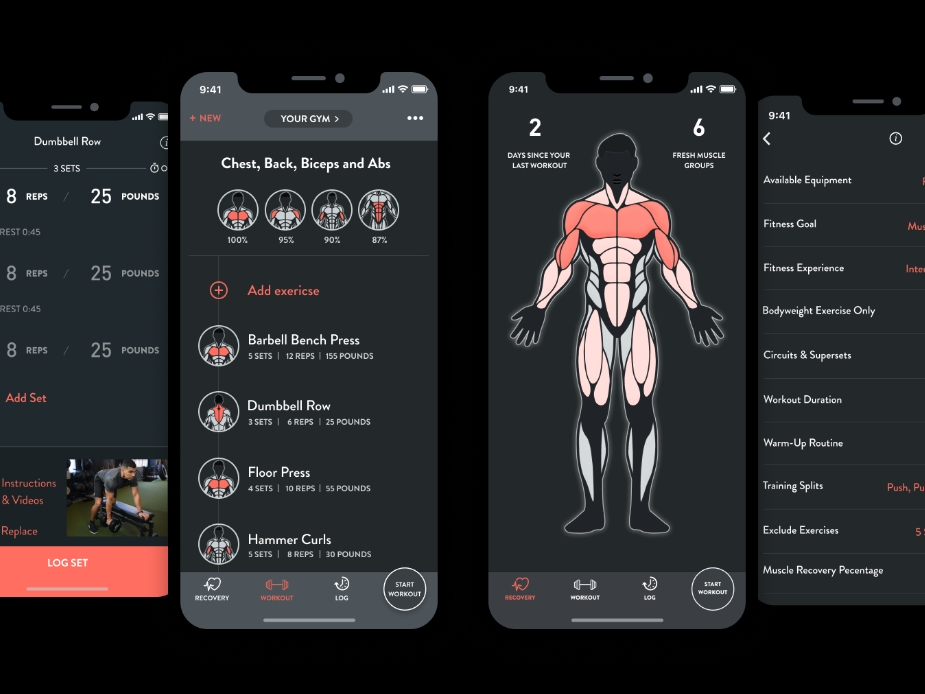
3. How to Choose the Right AI Fitness App for You
With many options out there, picking the right app can feel overwhelming. Here are key criteria to consider:
- Goal alignment: Are you aiming to build strength, lose fat, improve mobility, or all of the above? Choose an app whose focus matches your goal.
- Equipment flexibility: If you train at home with minimal gear, ensure the app supports bodyweight or small-equipment workouts.
- User interface & logging: How easy is it to log workouts, track progress, and see results? An intuitive UI makes a big difference.
- Adaptive intelligence: Does the app adjust your workouts based on your logged history? The smarter the algorithm, the more tailor-made the experience.
- Trial period & pricing: Many premium features are behind subscriptions. Look for a trial so you can test whether the personalization really works for you.
- Support & guidance: Does it give you exercise demos, form tips, or community support? These help especially if you’re training independently.
- Long-term usability: Will the app scale as you get stronger and your goals evolve? A good AI app should continue adapting not only for beginners but for intermediate or advanced stages.
Considering these criteria will help you pick an app that fits your lifestyle, commitment level, and training context.
4. Top AI Fitness Apps Worth Knowing in 2025
Here are some standout apps that are frequently mentioned in reviews and features for delivering next-level personalization.
• Fitbod
Fitbod -building programs. Its algorithm accounts for equipment availability, muscle recovery status, and progression.
It’s ideal if you’re focused on strength and want structured routines tailored to your gear and recovery.
• FitnessAI
FitnessAI uses data from millions of logged workouts and offers both home and gym routines, adapting reps, sets, and weights for you.
Great for users wanting a “virtual trainer in your pocket”.
• Coachify.AI
Coachify.AI brings workout planning, calorie and macro tracking, and progress monitoring together with AI-tailored programs.
Useful if you want an all-in-one solution combining exercise and nutrition tracking.
• Freeletics
Freeletics offers bodyweight-only programs and a strong community feel, which is especially helpful if you train without gym equipment.
A solid pick for home-based training with minimal gear.
• BodBot
BodBot delivers highly personalized routines accounting for your schedule, goals, equipment and fitness level.
Offers good customization for users who discriminate between previous activity, injuries or preferences.
• Zing AI
Zing AI is designed for both home and gym, generating plans that adjust to your equipment, energy level and feedback.
Versatile for users who train in mixed environments.
These apps represent a range of price tiers, goals, and training contexts — you can pick based on what you want and what you have available.
5. What to Expect: Workflow of an AI Fitness App
Here’s a typical sequence you’ll follow when using one of these apps:
- Initial setup and profile: You answer questions about your age, weight, goals, equipment, workout history, schedule, and preferences.
- First workout plan generation: Based on your profile, the AI builds your first week of workouts.
- Workout logging and tracking: Each time you complete or skip a workout, you input feedback (how it felt, whether you used weights, etc.).
- Algorithmic adjustment: The app uses the logged data to adjust the next session — maybe changing reps, rest times, or even suggesting different exercises.
- Progress monitoring: You look at your metrics (strength gains, workout compliance, endurance improvements) and the app may show trends.
- Long-term evolution: As you get fitter, the app increases intensity or modifies the focus (e.g., from beginner to intermediate) and continues adapting.
Knowing this workflow helps you use the app more effectively — your input matters. The more accurate your logs and feedback, the smarter the personalization becomes.
6. Tips to Get the Most Out of Your AI App
Here are some practical tips to maximize results from any AI fitness app:
- Be honest in your initial setup: Over-estimating your ability will cause the algorithm to recommend too hard workouts, which can reduce motivation.
- Log consistently: Every session you complete, mark it done. If you skip, note why. That data helps the AI adapt.
- Update equipment and availability: If your gear or schedule changes, update the app so the plan stays relevant.
- Take form and recovery seriously: Even the smartest AI doesn’t see everything. Ensure your execution of exercises is safe and, if possible, check form via video or mirror.
- Use the trial period wisely: Many apps offer free trials — test whether the personalization matches your needs, and check how the interface handles your feedback.
- Don’t expect magic overnight: The app is a tool — your consistency is what drives results. Make the plan your habit.
- Combine with nutrition & recovery: Even the best workout app will be limited if you ignore rest or fueling. Many of these apps integrate or recommend nutrition features.
By following these tips, you’ll make sure the app works for you, rather than simply using an app and expecting results without engagement.
7. Common Pitfalls & How to Avoid Them
Even the best AI fitness apps can be under-utilised. Here are some pitfalls:
- Skipping the logging: If you don’t log workouts or feedback, the AI loses its “learning”, and the plan becomes less tailored.
- Choosing misaligned goals: If you pick an app designed for bodybuilders but your goal is general fitness, you may feel mismatch.
- Ignoring form or injury history: AI can account for certain limitations, but if you have an injury or mobility issue, you may need specialized guidance beyond what general AI provides.
- Treating it as a passive tool: The AI is only as good as your participation. If you miss large chunks of workouts, the personalization breaks down.
- Over-relying on equipment changes: Some apps assume a certain level of equipment — if your gear availability changes without updating the app, the plan may become unrealistic.
Avoiding these pitfalls ensures that you get the full benefit of the technology, and the personalization remains meaningful.
8. Conclusion: The Future of Personalized Fitness is in Your Pocket
We’re at an exciting point in home and mobile fitness where AI isn’t just a buzzword — it’s a practical differentiator. Apps like Fitbod, FitnessAI, Coachify.AI, Freeletics and others bring high-quality personalized training into your pocket, with plans that adapt to you, not the other way around.
While nothing replaces your commitment, discipline and effort, these AI tools significantly lower the barrier to well-designed, personalized workouts — especially if you don’t have access to a personal trainer or gym.
If you’ve been hesitating to pick a workout app, 2025 may be the right time. Choose the one that fits your goal, set it up honestly, log your workouts, and let the AI do the heavy planning. Your consistency will deliver the results.
In short: start smart, stay consistent, and let the personalization work for you. The future of fitness is personalized — and it’s already in your hands.